
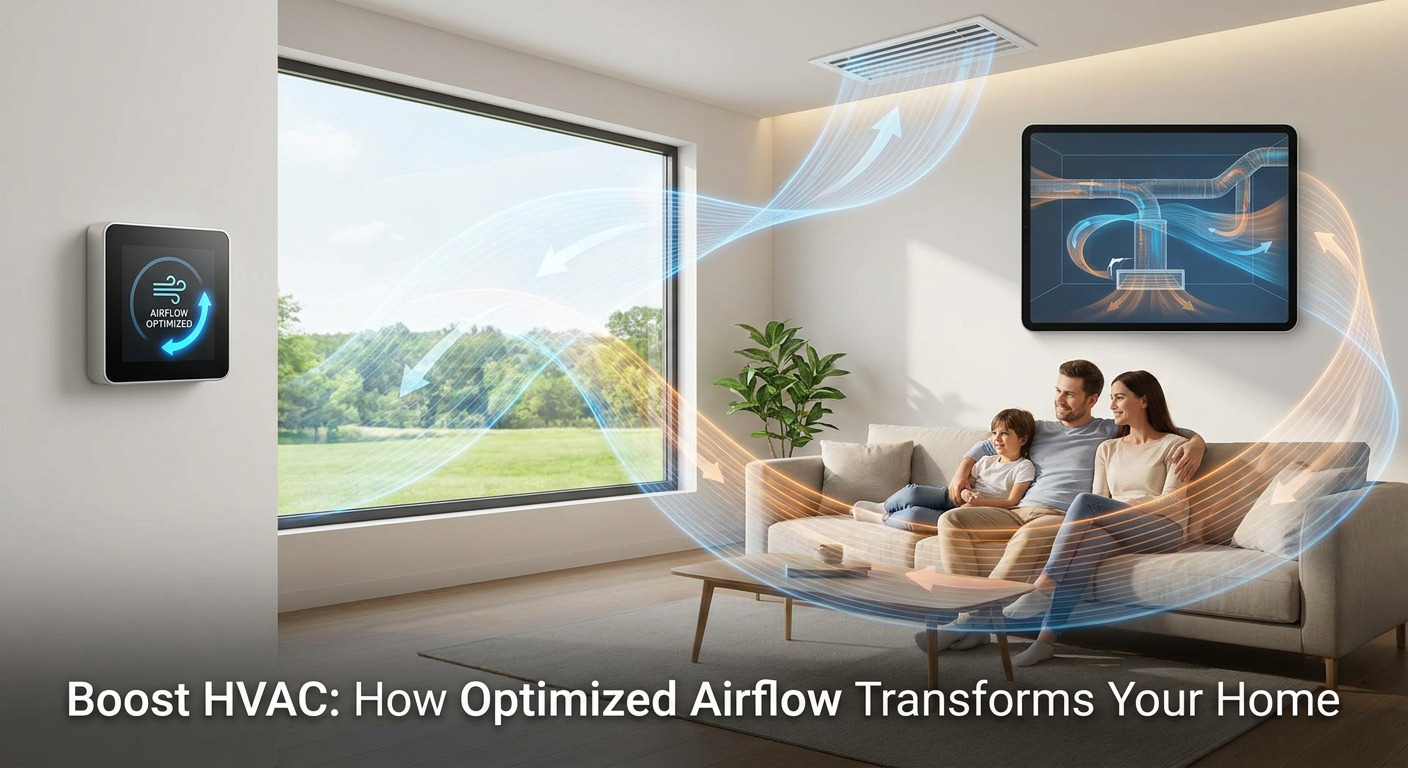
The subtle hum of an HVAC system often lulls homeowners into a false sense of security. We assume if it’s running, it’s working optimally. But what if your system, whether a robust commercial-grade unit or a standard residential model, is constantly battling an invisible enemy? That enemy is poor airflow, and it's silently draining your wallet, diminishing comfort, and shortening the lifespan of your critical home infrastructure.
Imagine trying to run a marathon with a pinched artery. Your heart is working overtime, but the blood isn't flowing effectively to your muscles. That's precisely what happens to your HVAC system when airflow is compromised. Instead of a smooth, efficient transfer of heated or cooled air, your system struggles, cycling more frequently, consuming excessive energy, and often failing to reach desired temperatures. In Salt Lake County, where temperatures swing wildly from scorching summers to freezing winters, an inefficient system isn't just an inconvenience; it's a significant financial burden and a comfort crisis waiting to happen.
The Unseen Power of Airflow: Why It's Your HVAC's Lifeblood
Many homeowners focus solely on the thermostat setting or the age of their unit when diagnosing HVAC issues. However, the path the air takes – its journey from return vents, through the filters, over the coils, and out the supply vents – is arguably the most critical factor in overall system performance. A well-designed and maintained airflow system ensures that conditioned air reaches every corner of your home efficiently, preventing hot and cold spots and reducing the workload on your furnace or air conditioner.
Consider a home in West Valley City built in the 1980s. Its original ductwork might be undersized for modern efficiency standards or riddled with leaks. The homeowner might consistently set their thermostat to 72°F, yet find certain rooms perpetually 5-7 degrees warmer or colder. This isn't necessarily a fault of the HVAC unit itself, but rather a symptom of restricted or uneven air distribution. Addressing airflow isn't just about comfort; it's about unlocking the latent potential of your existing HVAC investment.
Diagnosing Airflow Saboteurs: Where to Begin Your Investigation
Before you call for a costly system replacement, understanding the common culprits behind poor airflow can save you thousands. Think of it as a detective mission; each clue points to a potential bottleneck.
1. The Clogged Filter: Your System's Choking Hazard
This is perhaps the most common and easily remedied airflow issue, yet it's astonishing how often it's overlooked. A dirty air filter restricts the volume of air flowing into your HVAC system, forcing the blower motor to work harder. This increased strain leads to higher energy consumption, reduced heating/cooling capacity, and can even cause your system to overheat or freeze up (in the case of AC coils). We've seen filters in Salt Lake County homes so caked with dust and pet dander they resembled felt blankets, effectively suffocating the entire system. A good rule of thumb: check your filter monthly and replace it every 1-3 months, depending on usage, pets, and allergies.
2. Obstructed Vents: The Silent Blockade
Take a walk through your home, paying close attention to your supply and return vents. Are they blocked by furniture, rugs, or drapes? Are registers closed in unused rooms? While closing vents might seem like a clever way to save energy, it actually throws off the delicate balance of your HVAC system. It increases static pressure within the ductwork, making your blower motor work harder and reducing overall system efficiency. Ensure all vents are clear and unobstructed to allow for free air movement.
3. Leaky Ductwork: The Invisible Energy Thief
This is where significant energy loss often occurs, particularly in older homes or those with poorly installed duct systems. Ductwork in attics, crawl spaces, or basements is especially vulnerable to leaks and disconnections. According to the U.S. Department of Energy, typical duct systems lose 25 to 40 percent of the heating or cooling energy put into them due to leaks. That's like paying for a gallon of gas but only getting to use three-quarters of it. Sealing and insulating ducts can dramatically improve efficiency, ensuring conditioned air reaches its intended destination. A professional HVAC technician can perform a duct leakage test to pinpoint problem areas.
4. Undersized or Improperly Designed Ductwork: A Foundational Flaw
Sometimes, the problem isn't just leaks or blockages, but the very design of the duct system itself. If the ducts are too small for the size of your HVAC unit or your home, the system will struggle to push the required volume of air. This is a common issue when homeowners upgrade to a larger HVAC unit without assessing the existing ductwork. Similarly, long, winding, or poorly branched duct runs can create excessive resistance, choking airflow. Rectifying this often requires professional intervention, potentially involving duct modifications or resizing.
Strategic Enhancements for Optimal Airflow and HVAC Performance
Beyond addressing the basic saboteurs, several proactive steps can fine-tune your home's airflow, transforming your HVAC system from merely functional to truly efficient.
1. Professional Duct Sealing and Insulation: The Unsung Hero
While we touched on leaky ducts, the full benefit of professional sealing and insulation can't be overstated. Imagine your ductwork as a series of veins and arteries. If they're hemorrhaging conditioned air into unconditioned spaces like an attic, your heart (the HVAC unit) has to pump relentlessly to compensate. Aeroseal technology, for instance, can internally seal ducts from the inside out, addressing leaks that are otherwise impossible to reach. Insulating ducts in unconditioned spaces further prevents temperature loss or gain, ensuring the air remains at its target temperature until it enters your living space. This is particularly impactful for homes in places like West Valley City, where attic temperatures can soar or plummet.
2. Balancing the System: Precision Air Distribution
An HVAC system isn't just about moving air; it's about moving the right amount of air to the right places. Professional HVAC technicians can perform a static pressure test and balance your system. This involves adjusting dampers within the ductwork to ensure each room receives an appropriate volume of conditioned air. A balanced system eliminates hot and cold spots, leading to uniform comfort throughout your home and reducing the need to constantly adjust the thermostat. This specialized service goes far beyond simply opening or closing vents randomly.
3. Consider Zoning: Tailored Comfort, Unmatched Efficiency
For larger homes or those with diverse heating/cooling needs (e.g., bedrooms versus living areas), a zoning system can be a game-changer. Zoning allows you to control the temperature in different areas or "zones" of your home independently. This is achieved by installing motorized dampers within your ductwork that open and close based on thermostat calls in each zone. Not only does this maximize comfort, but it also dramatically improves energy efficiency by conditioning only the occupied areas. It's a prime example of how targeted airflow optimization can lead to significant energy savings, a concept often applied to advanced commercial HVAC installations.
4. Upgrade Your Thermostat: The Smart Control Center
While not directly an airflow component, a smart or programmable thermostat plays a crucial role in managing your HVAC system's output based on your home's actual needs. These devices can learn your schedule, integrate with zoning systems, and even offer remote access, allowing you to fine-tune temperatures and thus airflow from anywhere. Some advanced models even monitor humidity levels, further optimizing comfort and efficiency.
The Long-Term Payoff: Beyond Immediate Comfort
Investing in airflow improvements isn't just about immediate comfort. It's a strategic move that yields long-term benefits:
- Extended HVAC Lifespan: When your system isn't constantly battling restrictions, its components wear out less quickly, delaying costly repairs and replacements.
- Reduced Energy Bills: Optimized airflow means your HVAC unit works less to achieve and maintain desired temperatures, leading to substantial savings on your monthly utility bills.
- Improved Indoor Air Quality (IAQ): A well-functioning system with proper airflow and filtration is more effective at removing airborne contaminants, contributing to a healthier living environment.
- Enhanced Home Value: A comfortable, energy-efficient home is more attractive to potential buyers, increasing its market value.
Don't let your HVAC system struggle in silence. A proactive approach to improving your home's airflow is one of the most impactful investments you can make in your comfort, your finances, and the longevity of your home's critical systems. If the air in your home feels sluggish, or your energy bills are stubbornly high, it's time to look beyond the thermostat and delve into the unseen world of airflow.