
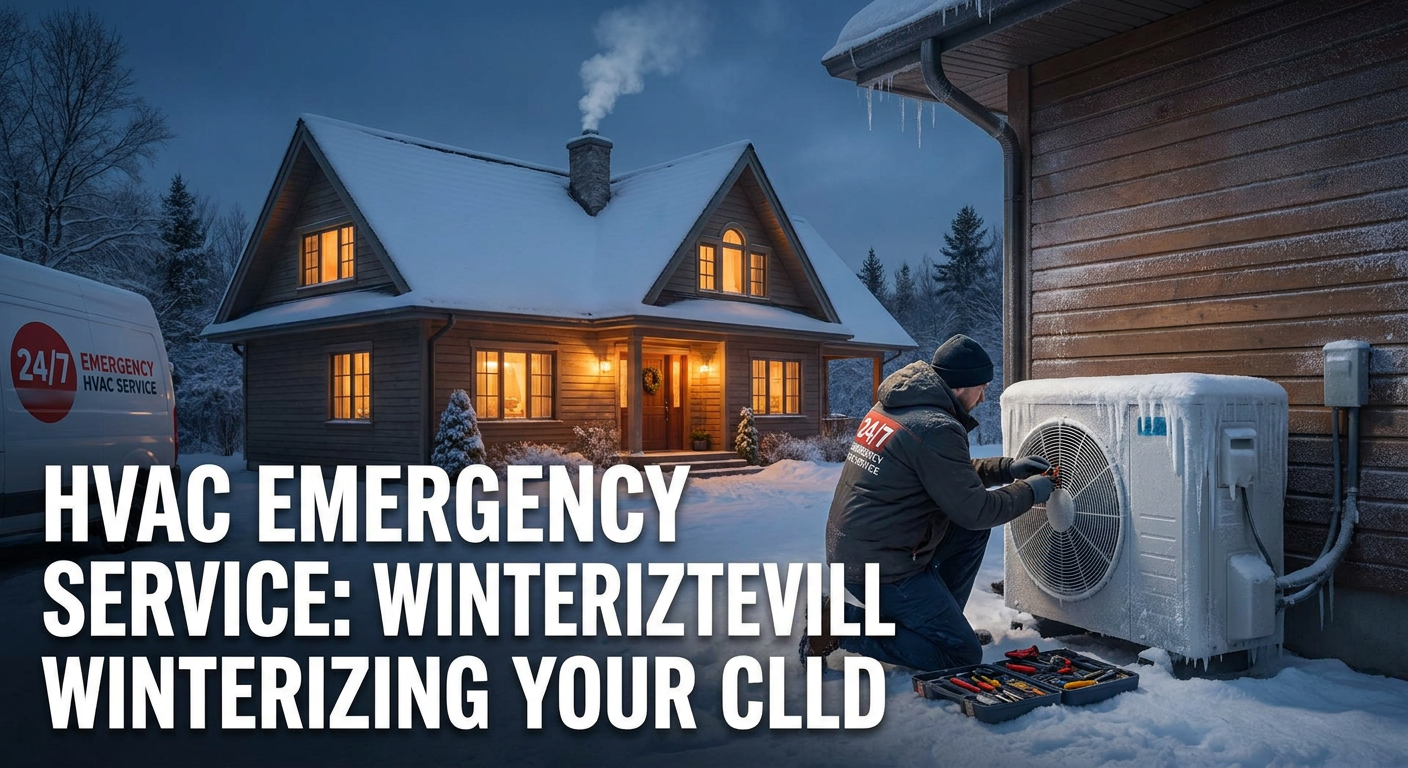
The mercury plummets, and suddenly, that faint whirring from your furnace sounds less like a comforting hum and more like a ticking time bomb. A single, unexpected cold snap can transform a cozy home into an icebox, often leading to frantic searches for emergency service when the heating system inevitably falters. This isn't just an inconvenience; it's a critical failure that can be avoided with proactive, intelligent winterization. Forget the generic checklists; this isn't about slapping on a furnace filter and calling it a day. We're talking about a comprehensive strategy to safeguard your HVAC investment, optimize efficiency, and ensure uninterrupted warmth, even when the Wasatch Front is buried under a foot of snow.
Imagine a scenario: a blizzard rages outside your West Valley City home. Your neighbor, who skipped their annual maintenance, is now bundling up in multiple layers, waiting for a technician who's probably swamped with calls. Meanwhile, your HVAC system purrs contentedly, having been meticulously prepared for the onslaught. The difference? A commitment to true winterization – a process that extends far beyond a casual glance at your thermostat settings.
The Unseen Costs of Neglect: Why Winterization Isn't Optional
Many homeowners view HVAC maintenance as a discretionary expense, a luxury rather than a necessity. This perspective often shifts dramatically the moment their furnace sputters into silence on the coldest night of the year. The immediate cost of an emergency service call is just the tip of the iceberg. Consider the ripple effects: frozen pipes, potential water damage, the discomfort of an unheated home, and the accelerated wear and tear on an already struggling system. A single, catastrophic breakdown can easily cost thousands in repairs, far outweighing the modest investment in preventative care.
In Salt Lake County, where winter temperatures can routinely dip below freezing, the stakes are even higher. Our unique climate, with its heavy snowfall and often dramatic temperature swings, places immense stress on heating systems. Ignoring these demands is akin to driving a car through a blizzard on bald tires – you're simply inviting disaster. The goal of winterization isn't just to keep your house warm; it's to protect your property, your family's comfort, and your financial peace of mind.
Beyond the Filter: A Deep Dive into Winterization Essentials
While changing your air filter is foundational, it's merely the first brick in a much larger wall of defense. A truly effective winterization strategy involves several interconnected components, each playing a crucial role in your system's cold-weather performance and longevity.
1. The Annual Professional Tune-Up: Your System's Annual Physical
This is non-negotiable. A certified HVAC technician performs a multi-point inspection and tune-up, much like a doctor conducting a thorough physical. This isn't just about identifying existing problems; it's about spotting potential issues before they escalate into costly failures. During a comprehensive tune-up, a technician will typically:
- Inspect and clean the heat exchanger: Cracks here can lead to dangerous carbon monoxide leaks.
- Check and calibrate the thermostat: Ensuring accurate temperature readings and efficient cycling.
- Lubricate moving parts: Reducing friction and wear, extending component life.
- Test electrical connections and voltage: Preventing shorts and power surges.
- Inspect and clean the blower motor and wheel: Optimizing airflow and efficiency.
- Verify gas pressure and burner operation: Ensuring safe and complete combustion.
- Examine the flue system: Checking for blockages or leaks that could impede exhaust.
- Assess refrigerant levels (if applicable): Though primarily for cooling, proper levels can impact overall system balance.
This proactive approach drastically reduces the likelihood of needing emergency service during peak demand. A well-tuned system operates more efficiently, potentially saving you 10-15% on heating costs alone, according to ENERGY STAR estimates.
2. Air Filter Fortification: The Lungs of Your HVAC
An analogy often used is that the air filter is the lungs of your HVAC system. A clogged filter is like trying to breathe through a thick blanket – it suffocates the system, forcing it to work harder, consume more energy, and ultimately fail prematurely. While the general recommendation is to change filters every 1-3 months, homes with pets, allergies, or high dust levels in areas like Magna or Taylorsville might require more frequent changes, perhaps monthly.
Consider upgrading to a higher MERV (Minimum Efficiency Reporting Value) rating filter, but consult with an HVAC professional first. While higher MERV filters capture more particles, they can also restrict airflow in older or less powerful systems, leading to other issues. A MERV 8-11 is often a good balance for most residential systems.
3. Thermostat Transformation: Smart Control, Smarter Savings
Your thermostat is the brain of your HVAC system. If you're still using a decades-old dial, you're missing out on significant efficiency gains. Upgrading to a smart or programmable thermostat allows you to:
- Set schedules: Automatically lower temperatures when you're away or asleep.
- Utilize geofencing: Adjust temperature based on your proximity to home.
- Monitor energy usage: Gain insights into your heating patterns.
- Remote access: Control your system from anywhere via a smartphone app.
Programming your thermostat to drop temperatures by 7-10 degrees Fahrenheit for 8 hours a day can save up to 10% on heating costs annually, according to the Department of Energy. This isn't just about comfort; it's about intelligent energy management.
4. Ductwork Diagnostics: Sealing the Leaks, Saving the Heat
Picture your ductwork as a network of veins and arteries, transporting warm air throughout your home. If these pathways are riddled with leaks, cracks, or disconnections, a significant portion of your precious heat escapes into unconditioned spaces like attics, crawl spaces, or wall cavities. Studies suggest that typical duct systems lose 20-30% of the air moving through them due to leaks, holes, and poorly connected ducts. That's like paying for 10 gallons of gas but only getting 7 into your tank.
An HVAC technician can perform a duct pressure test to identify leaks and then seal them using mastic sealant or specialized metal-backed tape (not common duct tape, which degrades over time). Ensuring your ducts are properly insulated, especially those running through unconditioned areas, also prevents heat loss and maintains consistent temperatures throughout your home. This seemingly minor step can dramatically improve comfort and reduce your reliance on emergency service calls caused by an overworked system trying to compensate for lost heat.
5. Outdoor Unit Oversight: Protecting Your Condenser
While your furnace does the heavy lifting indoors, the outdoor condenser unit (if you have a heat pump or central AC that shares components) also requires attention. Before winter sets in:
- Clear debris: Remove leaves, twigs, dirt, and any other obstructions from around the unit. Maintain at least two feet of clearance.
- Inspect for damage: Check for bent fins or corrosion.
- Consider a cover (with caution): If you have a central AC unit, a breathable cover can protect it from heavy snow and ice, but ensure it allows for adequate ventilation to prevent moisture buildup. For heat pumps, avoid covering, as they operate year-round.
- Elevate (if prone to snow drifts): If your area experiences heavy snowfall, consider elevating the unit slightly to prevent it from being buried, which can impede airflow and cause damage.
6. Carbon Monoxide Detectors: The Silent Guardian
This isn't directly an HVAC maintenance step, but it's an absolutely critical component of winter safety, especially when your furnace is running frequently. Carbon monoxide (CO) is an odorless, colorless gas produced by incomplete combustion, and a faulty furnace or blocked flue can be a source. Install CO detectors on every level of your home, especially near sleeping areas, and test them monthly. This simple step could literally save lives.
The Real-World Impact: A Case Study from West Valley City
Consider the Peterson family in West Valley City. For years, they'd simply hoped for the best with their aging furnace. Every winter, they'd experience fluctuating temperatures, high utility bills, and the nagging fear of a breakdown. Last year, after a particularly brutal cold snap, their furnace finally gave out entirely. The emergency service call was expensive, and the repair took an entire day, leaving them bundled under blankets. This experience prompted them to invest in a full winterization service the following fall. The results were immediate: consistent warmth, noticeably lower energy bills, and, most importantly, the peace of mind that comes from knowing their system is prepared. They haven't had a single issue since.
This isn't an isolated incident. Across Salt Lake County, homeowners who prioritize proactive maintenance consistently report greater comfort, lower operating costs, and significantly fewer unexpected breakdowns. The minimal upfront cost of winterization pales in comparison to the potential expenses and discomfort of a mid-winter HVAC failure.
Beyond the Checklist: A Philosophy of HVAC Stewardship
Winterizing your HVAC system is more than just a list of tasks; it's a philosophy of responsible homeownership. It’s an acknowledgment that your heating system is a complex, vital component of your home's infrastructure, deserving of regular attention and expert care. By embracing this approach, you're not just preventing emergency service calls; you're extending the life of your equipment, optimizing its performance, and ensuring your family's comfort and safety through the harshest winter months. Don't wait for the first frost to remind you; prepare now, and enjoy a truly warm and worry-free season.