
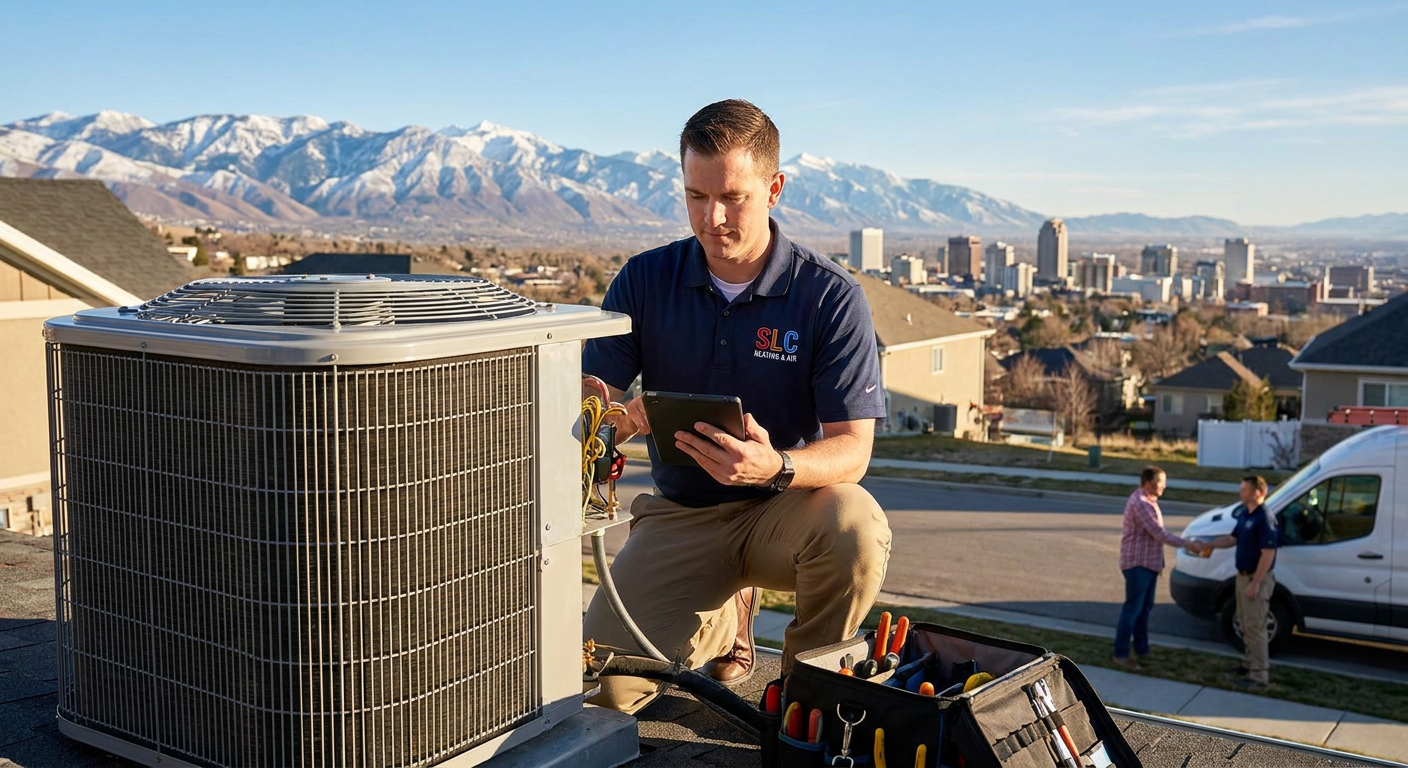
The mercury dips to single digits, or perhaps the summer sun bakes Salt Lake County into an oven, and suddenly, your HVAC system sputters, groans, or simply gives up. A chill permeates your home, or a suffocating humidity clings to every surface. This isn't just an inconvenience; it's a breakdown of your essential comfort infrastructure, a silent alarm signaling the need for immediate, competent intervention. Yet, when faced with such an urgent problem, many homeowners make a critical mistake: they rush to the first available technician, often sacrificing quality for speed. This hasty decision, however, can lead to botched repairs, inflated costs, and recurring issues that haunt your utility bills and peace of mind for years.
Consider Sarah, a homeowner in West Valley City. Her furnace quit on a frigid January night. In a panic, she called the first number that popped up in a quick search. The technician arrived promptly, made a quick fix, and charged a hefty sum. Two months later, the furnace died again. The original company was nowhere to be found. Sarah learned a hard lesson: a rapid response doesn't guarantee a lasting solution. The true cost of an HVAC problem isn't just the immediate repair bill; it's the cumulative expense of future breakdowns, inefficiency, and the sheer frustration of dealing with unreliable service. Choosing the right HVAC contractor isn't merely about fixing a broken unit; it's about investing in the long-term health of your home's most vital climate control systems.
Beyond the Quick Fix: Licensing and Insurance are Non-Negotiable
Imagine trusting a brain surgeon who hasn't passed medical boards. Unthinkable, right? Yet, many homeowners unwittingly invite unlicensed and uninsured HVAC technicians into their homes, handing them the keys to a complex, potentially dangerous system. In Utah, specific licensing is required for HVAC contractors. This isn't just a bureaucratic hurdle; it's a testament to a contractor's foundational knowledge, adherence to safety standards, and commitment to their craft. A properly licensed contractor understands the intricate dance of refrigerants, electrical components, and airflow dynamics – elements that, when mishandled, can lead to serious hazards, from carbon monoxide leaks to electrical fires.
Beyond licensing, never overlook insurance. A contractor should carry both liability insurance and workers' compensation. Liability insurance protects your property in case of accidental damage during the repair or installation process. Imagine a technician accidentally dropping a heavy unit, damaging your flooring or walls. Without liability insurance, you'd be left footing the bill. Workers' compensation, on the other hand, protects you from financial responsibility if a technician is injured on your property. The absence of these crucial safeguards transforms your home into a high-stakes gamble, where an unforeseen mishap could financially cripple you. Always ask for proof of current licensing and insurance, and don't hesitate to verify them with the relevant state authorities. A reputable company will provide this information without hesitation.
The Expertise Spectrum: From Generalists to Specialists
Not all HVAC problems are created equal. Some are routine, like a clogged filter or a faulty thermostat. Others are far more complex, involving intricate diagnostic challenges, obscure parts, or specialized refrigeration systems. When your commercial freezer in West Valley City suddenly fails, you don't call someone whose primary experience is residential furnace repair. You need a specialist. A truly adept HVAC contractor possesses a broad spectrum of expertise, but also understands when a specific issue warrants a deeper dive into a particular system type.
Ask about their experience with your specific make and model of equipment. Do they regularly service Lennox, Carrier, Trane, or Daikin units? Have they tackled the unique challenges of heat pump repair versus traditional AC units? An experienced contractor will often have a history of working with various brands and system types, allowing for more accurate diagnostics and efficient solutions. Furthermore, inquire about ongoing training. The HVAC industry is constantly evolving with new technologies, refrigerants, and energy efficiency standards. A contractor who invests in continuous education for their technicians is demonstrating a commitment to staying at the forefront of the field, ensuring they can handle even the most cutting-edge systems.
Transparent Pricing: No Hidden Surprises
Few things are more frustrating than receiving an unexpected bill that far exceeds the initial estimate. In the HVAC world, this is a common pitfall for unsuspecting homeowners. A trustworthy contractor provides clear, upfront pricing, often after a thorough diagnostic assessment. They should be able to explain the breakdown of costs – parts, labor, and any associated fees – in a way that is easily understandable. Avoid contractors who offer vague estimates or insist on beginning work without a written quote.
Be wary of companies that demand full payment upfront, especially for a repair. While a deposit for larger installations might be reasonable, immediate full payment for a diagnostic or minor repair can be a red flag. Always get a written estimate detailing the scope of work and all associated costs before any work begins. A detailed invoice upon completion is also essential, listing all services performed and parts installed. This transparency builds trust and protects you from financial exploitation. Remember, the cheapest quote isn't always the best value. A slightly higher, but thoroughly explained, quote from a reputable company often saves you money in the long run by preventing future problems.
The Digital Footprint: Reviews and Reputation
In the digital age, a company's reputation is often broadcast across various online platforms. Before committing to an HVAC contractor, perform due diligence by checking their online reviews. Google, Yelp, Angie's List, and the Better Business Bureau (BBB) are invaluable resources for gauging public sentiment. Look for patterns in reviews: are customers consistently praising their professionalism, punctuality, and the effectiveness of their repairs? Or are there recurring complaints about missed appointments, shoddy workmanship, or unexpected charges?
While a few negative reviews are almost inevitable for any business, a consistent stream of poor feedback or unanswered complaints should raise a serious red flag. Pay attention to how the company responds to negative reviews – a thoughtful, proactive response indicates a commitment to customer satisfaction, even when things go wrong. Also, consider the age of the company. A contractor with a long-standing presence in Salt Lake County or West Valley City often signifies a proven track record and deep roots in the community, suggesting reliability and accountability that fly-by-night operations simply cannot offer.
Communication is Key: From Diagnosis to Post-Repair
An HVAC system is a complex beast, and when it malfunctions, the technical jargon can be overwhelming. A truly excellent contractor doesn't just fix the problem; they explain it. They should be able to clearly articulate the issue, the proposed solution, and the steps involved in the repair process in terms that a layperson can understand. They should also be proactive in communicating any delays or unforeseen complications.
Beyond the initial explanation, consider their follow-up procedures. Do they offer a warranty on their repair work? What is their policy if the same problem recurs shortly after their visit? A strong warranty and a clear post-repair support system are hallmarks of a confident, customer-focused company. This level of communication extends to their office staff as well; professional, courteous, and efficient scheduling and billing processes reflect a well-run operation. The human element, the ability to build rapport and trust, is just as crucial as technical prowess when your comfort is on the line.
The Environmental & Ethical Compass: Energy Efficiency and Refrigerant Handling
In an era of increasing environmental awareness and stringent regulations, a responsible HVAC contractor doesn't just fix units; they consider their environmental impact. They should be knowledgeable about energy-efficient solutions and able to advise you on how to optimize your system for lower utility bills and a smaller carbon footprint. This might include recommendations for programmable thermostats, system upgrades, or even simple maintenance tips that enhance efficiency.
Crucially, inquire about their refrigerant handling practices. Refrigerants, particularly older types, are potent greenhouse gases. Improper handling, venting, or disposal is not only illegal but environmentally destructive. A reputable contractor will adhere strictly to EPA guidelines for refrigerant recovery and recycling, ensuring that these chemicals are handled safely and responsibly. Their commitment to ethical practices reflects a broader sense of professionalism and care, not just for your immediate problem, but for the wider community and planet. This often overlooked aspect distinguishes a truly forward-thinking and responsible HVAC partner.
Your Comfort, Your Choice
When your HVAC system falters in Salt Lake County or West Valley City, the immediate urge is to restore comfort as quickly as possible. However, the momentary relief of a hasty repair often gives way to long-term headaches and expenses. By taking a deliberate approach, meticulously evaluating licensing, insurance, expertise, transparency, reputation, communication, and ethical practices, you transform a stressful situation into an opportunity. You're not just hiring someone to fix a problem; you're forging a partnership with a professional who will safeguard your home's comfort, efficiency, and safety for years to come. Choose wisely, and enjoy the lasting warmth or cool embrace of a properly functioning HVAC system.