
The average American homeowner, when faced with an aging air conditioner or furnace, often defaults to a single, nagging question: Can it be fixed? This reflex, while understandable, frequently masks a more critical, and ultimately more economical, query: Should it be replaced? In Salt Lake County, where temperatures swing wildly from scorching summers to biting winters, a reliable HVAC system isn't merely a luxury; it's a foundational element of home comfort and safety. But like any complex mechanical system, your home's heating and cooling units have a finite operational life. Ignoring the inevitable can lead to a cascade of financial and comfort-related headaches.
The Unvarnished Truth: Average HVAC Lifespans
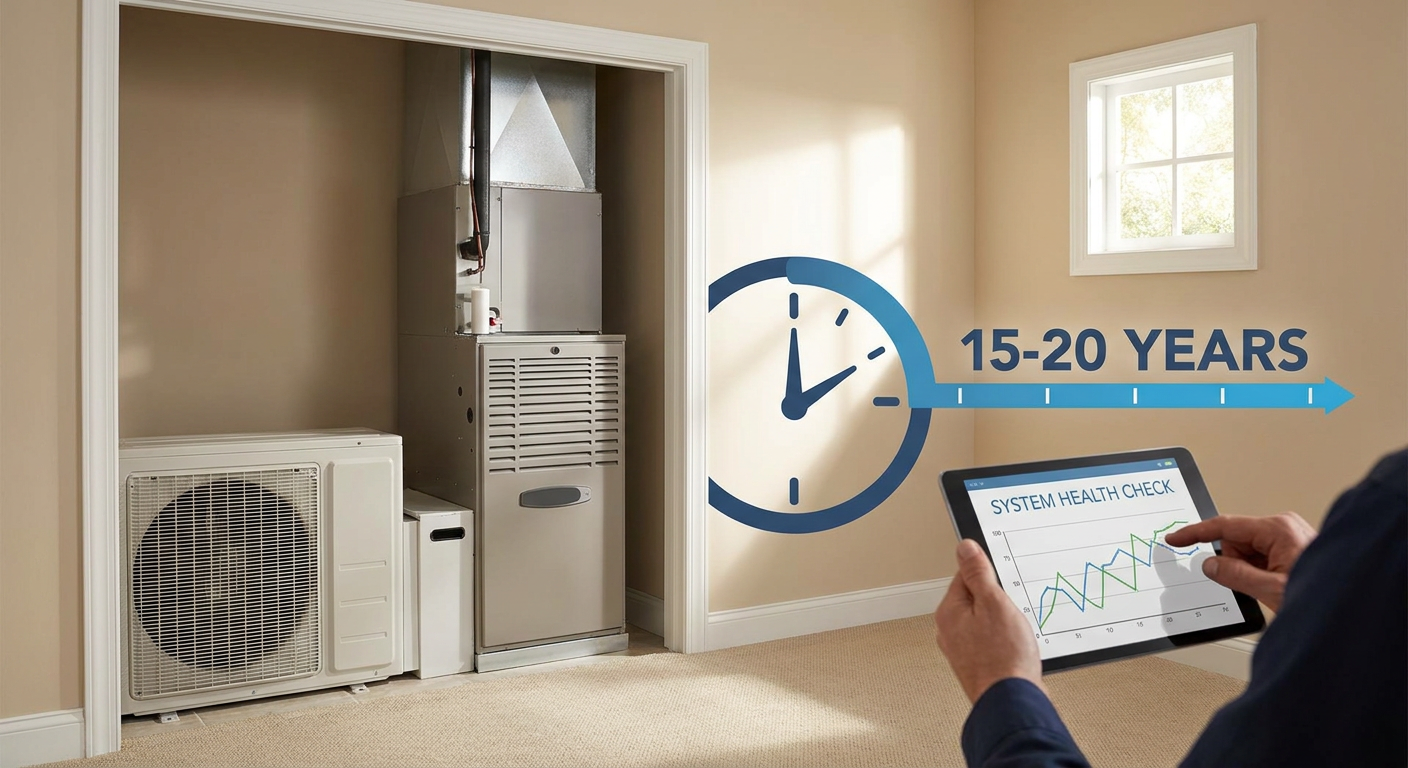
Let's cut through the marketing fluff and get to the numbers. A furnace, typically a robust piece of equipment, generally lasts between 15 and 20 years. Air conditioners, working under different stresses and often located outdoors, tend to have a slightly shorter run, averaging 10 to 15 years. Heat pumps, a hybrid marvel, usually fall into the 10-15 year range as well, much like their AC counterparts. These aren't arbitrary figures; they're derived from decades of industry data, component degradation curves, and the simple reality of wear and tear. A system installed in West Valley City in the early 2000s, for example, is almost certainly operating on borrowed time, regardless of how diligently it's been maintained.
However, these are averages. Several factors can dramatically influence where your specific system falls within this spectrum. Think of it like a vehicle: a meticulously maintained car driven gently on suburban streets will outlast one that's neglected and used for off-roading. Your HVAC system is no different.
Factors That Accelerate or Extend the Inevitable
1. Installation Quality: The Unsung Hero
Perhaps the most overlooked factor in HVAC longevity is the initial installation. A system that's improperly sized for the home, or one installed with shoddy ductwork and electrical connections, is doomed from the start. We've seen countless cases where a seemingly new residential unit struggles because the installer cut corners, leading to premature component failure. A perfectly installed system, on the other hand, operates efficiently and experiences less stress, naturally extending its life.
2. Maintenance Regimen: The Lifeblood of Longevity
Skipping annual tune-ups is akin to driving your car for tens of thousands of miles without an oil change. Filters clog, coils accumulate dirt, refrigerant levels dip, and electrical connections loosen. Each neglected item forces the system to work harder, consume more energy, and wear out faster. A comprehensive annual service, performed by a certified technician, addresses these issues proactively, often catching minor problems before they escalate into costly repairs.
3. Usage Patterns: The Daily Grind
Does your system run almost continuously, or only during extreme weather? A home with poor insulation, drafty windows, or a thermostat set to extreme temperatures (e.g., 65°F in summer, 78°F in winter) demands more from its HVAC. This increased workload directly translates to accelerated component wear. Conversely, a well-insulated home with moderate thermostat settings allows the system to operate more efficiently and rest more frequently, extending its life.
4. Climate Extremes: The Utah Factor
Salt Lake County's climate is notoriously demanding. Summers regularly push into the high 90s, while winters plunge well below freezing. These extreme temperature differentials force HVAC systems to work overtime, particularly during peak seasons. A system in a more temperate climate might last longer simply because it isn't subjected to such intense operational demands.
The Telltale Signs: When Repair Becomes Folly
While a breakdown is an obvious indicator, many residential HVAC systems offer subtle, yet unmistakable, clues that their end is nigh. Paying attention to these signals can save you from throwing good money after bad.
1. Escalating Repair Costs: The Financial Black Hole
If you're spending 50% or more of the cost of a new system on repairs within a short period (say, two years), it's a clear red flag. A $1,000 repair bill on a 15-year-old furnace might seem palatable in the moment, but if another major component fails six months later, you've effectively purchased a significant chunk of a new system's value without any of the benefits. We often advise homeowners to consider the "50% rule": if the repair cost exceeds 50% of a new unit's value, replacement is usually the wiser choice.
2. Declining Efficiency: The Invisible Tax
Are your utility bills mysteriously climbing, even when your usage patterns haven't changed? An aging HVAC system loses efficiency over time. Components wear, seals degrade, and motors become less effective, forcing the unit to consume more energy to achieve the same heating or cooling output. This isn't just an annoyance; it's a continuous, invisible tax on your wallet. A new, high-efficiency system, particularly one with a higher SEER (Seasonal Energy Efficiency Ratio) or AFUE (Annual Fuel Utilization Efficiency) rating, can often pay for itself in energy savings over its lifespan.
3. Frequent Breakdowns: The Perpetual Annoyance
If your technician is practically on a first-name basis with your family, your system is likely past its prime. Frequent breakdowns, especially of different components, indicate a system-wide decline. It's a bit like a car that needs a new transmission one month and a new engine the next; at some point, the core integrity is compromised. This constant cycle of repair isn't just expensive; it's a significant disruption to your home comfort.
4. Uneven Heating or Cooling: The Comfort Compromise
Do some rooms feel like a sauna while others are arctic? Is the furnace blasting hot air for what feels like an eternity without reaching the desired temperature? These are classic signs of an HVAC system struggling to maintain consistent comfort. While sometimes related to ductwork issues, uneven temperatures and prolonged run times often point to an aging unit that can no longer meet the demands of your home effectively.
5. Strange Noises or Odors: The Alarms You Shouldn't Ignore
While a minor hum is normal, grinding, squealing, rattling, or banging noises are not. These often signal failing motors, loose components, or internal blockages. Similarly, persistent musty, burning, or metallic odors emanating from your vents are serious indicators of potential issues, ranging from mold growth within the system to overheating electrical components. These aren't just nuisances; they can be safety hazards.
The Modern Advantage: Why Newer is Often Better
Beyond simply restoring comfort, replacing an old HVAC system with a new one offers a suite of benefits that extend far beyond mere functionality. Modern residential units are marvels of engineering compared to their predecessors.
1. Unprecedented Energy Efficiency: Today's HVAC systems are dramatically more efficient. A 15-year-old air conditioner likely has a SEER rating of 10-12. New models routinely boast SEER ratings of 16-20, with some even higher. This isn't just a marginal improvement; it translates into substantial annual savings on your utility bills, particularly in regions like Salt Lake County where heating and cooling demands are high.
2. Enhanced Comfort Features: Variable-speed blowers, two-stage compressors, and smart thermostat integration allow for more precise temperature control, quieter operation, and better humidity management. This means fewer temperature swings, more consistent comfort throughout your home, and cleaner indoor air.
3. Improved Indoor Air Quality: Many new systems can be integrated with advanced air purification technologies, including UV lights and high-MERV filters, to combat allergens, pollutants, and even viruses. This is a significant consideration for families with allergies, asthma, or general health concerns.
4. Environmental Impact: More efficient systems consume less energy, which directly reduces your home's carbon footprint. For environmentally conscious homeowners, this is a compelling reason to upgrade.
5. Warranty and Peace of Mind: A new system comes with a comprehensive manufacturer's warranty, typically covering parts for 10 years and labor for a shorter period. This provides a decade of peace of mind, knowing that major component failures are covered.
The Replacement Process: What to Expect
Deciding to replace your HVAC system, whether it's a furnace, air conditioner, or heat pump, is a significant investment. However, with the right professional guidance, the process can be remarkably smooth. When you choose a reputable HVAC company, you should expect:
- Thorough Home Assessment: A technician should not just quote you a price; they should perform a detailed load calculation (Manual J) to determine the exact heating and cooling needs of your residential property. This prevents oversizing or undersizing, which can lead to inefficiency and premature wear.
- Transparent Options: You should be presented with several options, detailing different efficiency levels, features, and price points, along with clear explanations of the benefits of each. A good contractor educates, not just sells.
- Professional Installation: This involves removing the old unit, installing the new one, connecting ductwork, refrigerant lines, and electrical components, and ensuring all safety protocols are met. Proper sealing and testing are critical.
- Post-Installation Support: A reliable company will follow up, ensure your satisfaction, and be available for any questions or adjustments. They should also explain the new system's operation and maintenance requirements.
The Final Word: Invest in Your Comfort and Future
The decision to replace your residential HVAC system is rarely simple. It's an investment, but one that pays dividends in comfort, energy savings, and peace of mind. While the allure of another repair might be strong, a candid assessment of your system's age, repair history, and performance often reveals that replacement is not just an option, but the financially and practically superior path forward. Don't wait for a complete breakdown in the dead of winter or the peak of summer; by then, your options may be limited, and your comfort severely compromised. Proactive replacement, guided by expert advice, ensures your Salt Lake County home remains a sanctuary, regardless of what the weather outside decides to do.