
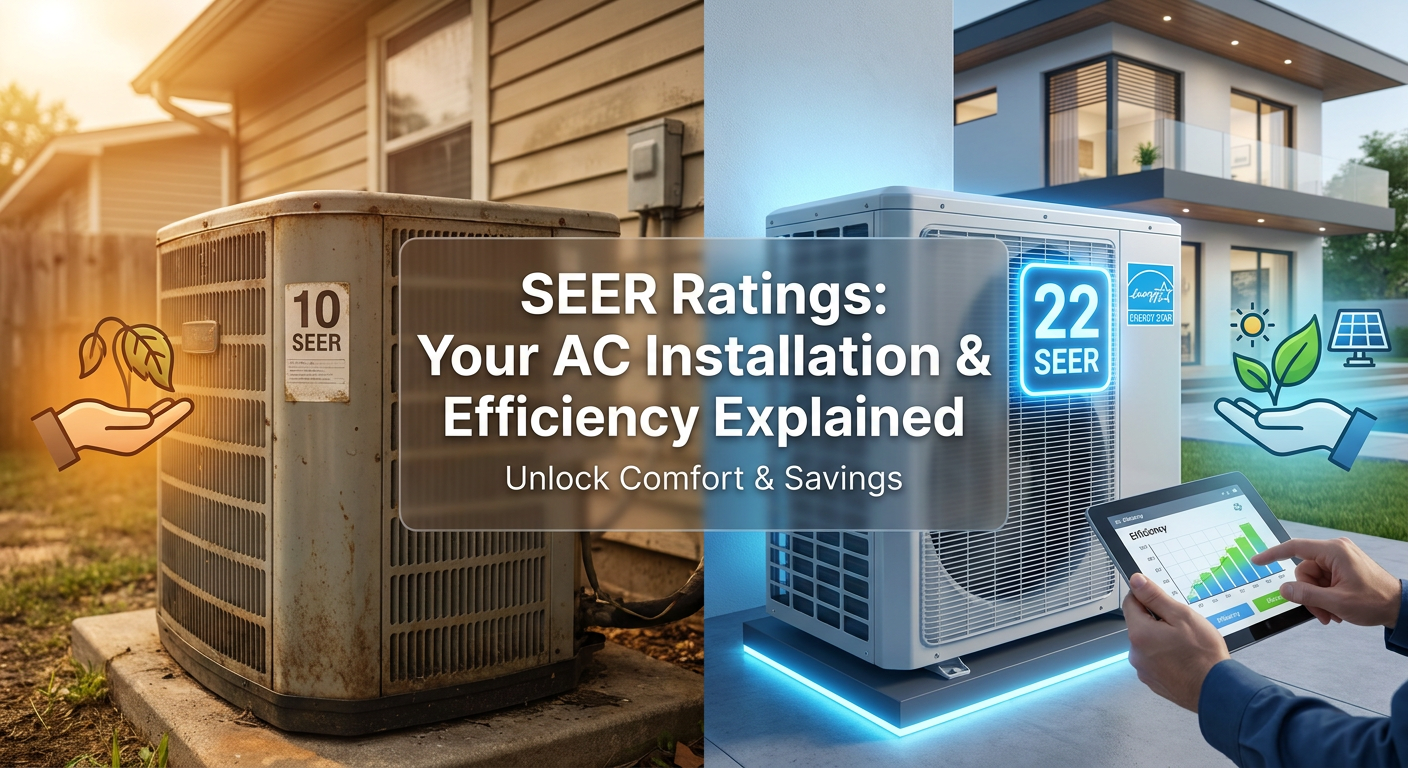
A startling reality: many homeowners in Salt Lake County and West Valley City are essentially leaving money on the table, year after year, simply because they don't fully grasp one critical acronym for their home's comfort system: SEER. It's not just a technical spec; it's a direct line to your utility bill, your carbon footprint, and the very air quality inside your home. Ignoring it during an AC replacement or new installation is akin to buying a car without checking its miles per gallon – a costly oversight.
The Invisible Number Dictating Your Comfort: What Exactly is a SEER Rating?
SEER stands for Seasonal Energy Efficiency Ratio. Forget the marketing jargon for a moment; at its core, SEER is a measure of an air conditioner's cooling output during a typical cooling season, divided by the total electric energy input during the same period. Think of it as your air conditioner's MPG. The higher the number, the more efficiently your unit converts electricity into cooling power. It's not a static measurement but a weighted average that accounts for varying temperatures and operating conditions throughout an average season, providing a far more realistic picture than a simple instantaneous efficiency rating.
This isn't just about raw power; it's about smart power. A SEER 18 unit doesn't necessarily cool your home faster than a SEER 13 unit. Instead, it achieves the same cooling effect using significantly less electricity over time. This distinction is crucial, especially in a climate like ours where summer temperatures can push systems to their limits for extended periods.
The Evolution of Efficiency: From Bare Minimum to Peak Performance
When the U.S. Department of Energy (DOE) first mandated SEER ratings in 1992, the minimum was SEER 10. Fast forward to 2006, it jumped to SEER 13. Then, a significant shift in 2015 brought regional standards, and as of January 1, 2023, the minimum SEER rating for new air conditioners varies by region. For states in our "North" region, the minimum SEER for split systems is now 13.4 SEER2 (a new testing methodology that equates roughly to 14 SEER under the old standard), while for single-package units, it's 14.3 SEER2 (old 15 SEER).
This isn't just bureaucratic red tape; it reflects a continuous push for energy conservation and cost savings for consumers. Manufacturers have responded by developing sophisticated technologies like variable-speed compressors, advanced fan motors, and smarter controls to achieve these higher ratings. A system from even a decade ago, operating at a SEER 13, is a far cry from the technological marvels available today at SEER 20, 24, or even higher. It's like comparing a flip phone to a modern smartphone – both make calls, but one offers an entirely different level of performance and features.
SEER vs. SEER2: A Nuance Worth Noting
The recent introduction of SEER2 standards often causes confusion. The change isn't about less efficiency; it's about a more rigorous testing procedure. SEER2 tests units at a higher external static pressure, mimicking real-world ductwork conditions more accurately. Consequently, a unit rated 14 SEER under the old standard might now be rated 13.4 SEER2. The actual efficiency of the unit hasn't changed, but its rating reflects a more demanding test. When comparing systems, ensure you're comparing apples to apples – either all SEER or all SEER2. Our technicians are well-versed in these distinctions and can clarify any questions you might have about your next installation.
The Tangible Benefits: Why a Higher SEER Rating Matters to You
Beyond the technical specifications, a higher SEER rating translates directly into several compelling advantages for homeowners in the Salt Lake Valley:
1. Significant Energy Savings and Lower Utility Bills
This is, arguably, the most immediate and impactful benefit. A higher SEER rating means your air conditioner uses less electricity to produce the same amount of cooling. Consider this: upgrading from an old SEER 8 unit to a new SEER 16 system can cut your cooling costs by as much as 50%. While the initial installation cost for a higher SEER unit is greater, the long-term savings often lead to a favorable return on investment. Imagine reducing your summer electricity bill by hundreds of dollars year after year – that's real money back in your pocket. These savings aren't theoretical; they're reflected in every monthly statement.
2. Enhanced Comfort and Humidity Control
Modern, high-SEER systems often incorporate variable-speed or two-stage compressors. Unlike older, single-stage units that are either "on" or "off" at full blast, these advanced systems can run at lower capacities for longer periods. This allows for more consistent temperatures throughout your home, eliminating hot and cold spots. More importantly, longer run cycles are far more effective at removing humidity from the air. In our dry climate, this might seem less critical, but even moderate humidity can make 80 degrees feel like 85. Better humidity control means you feel cooler at higher thermostat settings, further reducing energy consumption.
3. Quieter Operation
Another often overlooked advantage of variable-speed technology is quieter operation. When a system can modulate its output, it avoids the jarring, loud cycling of older units. It can run at lower, gentler speeds for longer, creating a much more peaceful indoor environment. This difference is particularly noticeable in open-concept homes or when your outdoor unit is near a patio or bedroom window. The subtle hum of a high-efficiency unit is a stark contrast to the roar of an older model.
4. Environmental Impact
Reducing energy consumption isn't just good for your wallet; it's good for the planet. Lower electricity usage translates to a smaller carbon footprint, contributing to cleaner air and a healthier environment. As stewards of our local community in Salt Lake County, this is a benefit we deeply appreciate and encourage our clients to consider. Choosing an efficient system is a tangible way to make a difference.
5. Increased Home Value and Reliability
A modern, high-efficiency HVAC system is a significant selling point for any home. Prospective buyers are increasingly aware of energy costs and appreciate the peace of mind that comes with a new, reliable, and efficient system. Furthermore, higher-end systems are often built with more durable components and advanced diagnostics, leading to fewer breakdowns and a longer operational lifespan, reducing the need for frequent AC repair calls.
The SEER Sweet Spot: Finding the Right Balance for Your Home
While the allure of the highest possible SEER rating is strong, it's crucial to understand that the "best" SEER rating isn't always the absolute highest number on the market. There’s a point of diminishing returns where the incremental energy savings from an even higher SEER unit don't justify the significantly increased upfront installation cost.
For many homes in West Valley City and surrounding areas, a SEER rating between 16 and 18 often represents the optimal balance of efficiency and cost-effectiveness. This range provides substantial energy savings over older units without the premium price tag of ultra-high SEER systems (20+), which might take many years to recoup their additional initial expense in energy savings alone.
Factors to consider when determining your ideal SEER rating include:
- Your current system's age and efficiency: If you're replacing a very old, low-SEER unit (e.g., SEER 8-10), the jump to even a SEER 16 will be dramatic in terms of savings.
- How long you plan to stay in your home: A longer occupancy allows more time to recoup the higher initial investment.
- Your budget: Be realistic about upfront costs versus long-term savings.
- Local energy costs: Higher electricity rates make energy savings even more impactful.
- Your home's insulation and airtightness: A well-insulated, sealed home will maximize the efficiency benefits of any AC system.
Beyond SEER: The Holistic Approach to AC Efficiency
While SEER is a critical metric, it's only one piece of the puzzle. A high-SEER unit installed improperly or in a home with glaring inefficiencies will never perform to its potential.
Proper Sizing is Paramount
An air conditioner that's too small won't cool effectively, constantly running and struggling. One that's too large will cycle on and off too frequently, leading to poor humidity removal and premature wear. Our expert technicians perform precise load calculations, considering factors like square footage, insulation levels, window efficiency, and even the number of occupants, to ensure your new system is perfectly sized for your specific home. This meticulous approach to installation is non-negotiable.
Ductwork Integrity
Leaky or poorly designed ductwork can account for up to 30% of energy loss. Even the most efficient AC unit can't overcome significant ductwork issues. We often recommend duct inspection and sealing as part of a comprehensive efficiency upgrade.
Regular Maintenance
Even a high-SEER system needs routine maintenance to maintain its peak efficiency. Dirty coils, clogged filters, and low refrigerant levels can significantly degrade performance and increase energy consumption. A professional tune-up ensures your system is clean, calibrated, and running optimally. Think of it as preventative medicine for your HVAC system, crucial for avoiding costly AC repair.
Smart Thermostats
Pairing your efficient AC with a smart thermostat allows for programmed settings, remote access, and learning capabilities, further optimizing energy use and enhancing comfort without constant manual adjustments.
Don't Guess, Get Expert Guidance
Understanding SEER ratings is the first step toward making an informed decision about your home's cooling system. However, translating that knowledge into the perfect solution for your specific property requires expertise. Our team of certified HVAC professionals specializes in assessing your unique needs, explaining the nuances of SEER and other efficiency metrics, and recommending the ideal system for your budget and comfort goals. Whether you're considering a new installation, upgrading an aging system, or simply seeking to understand your current unit's performance, we're here to provide clear, honest, and expert advice for homeowners across Salt Lake County and West Valley City. Don't let your comfort be dictated by an outdated system or a lack of information – empower yourself with knowledge and choose efficiency.